

Streaming has made music more accessible than ever, but it has quietly shifted almost all the financial power away from the people who actually make it. The average independent artist earns somewhere between $0.003 and $0.005 per stream, meaning a song needs roughly 250 plays just to generate one dollar. Fans who genuinely love an artist's work often have no idea how little their listens translate into real income. This guide breaks down exactly how direct music purchases work, why they matter for both sides of the relationship, and the practical steps artists and fans can take right now to make it happen.
Table of Contents
- Why buy music directly from artists?
- What you need to get started (as an artist or fan)
- Step-by-step: How to purchase music directly from an artist
- Common challenges and how to overcome them
- Why direct-to-fan music sales are the future and what most guides miss
- Ready to sell or support music direct? Next steps
- Frequently asked questions
Key Takeaways
| Point | Details |
|---|---|
| Direct support maximizes impact | Buying music directly from artists ensures they receive the highest share of your support. |
| Simple setup for success | Artists and fans only need a storefront, an email newsletter, and trusted payments to get started. |
| Overcome challenges easily | Automated emails, safe payments, and reliable backups minimize common pitfalls on both sides. |
| Future-proof your music career | Owning your customer data and relationships will matter more than any single platform. |
Why buy music directly from artists?
A direct purchase means exactly what it sounds like: you pay an artist for their music without a major platform taking a significant cut in the middle. That could mean buying a track or album through an artist's personal website, a storefront they set up themselves, a platform designed for independent sales, or even at a live event where they're selling physical or digital copies on the spot.
The numbers tell a stark story. Streaming services typically pay artists between $0.003 and $0.005 per stream, while direct purchases can return anywhere from 70% to 95% of the sale price directly to the artist. If a fan pays $10 for an album through a direct storefront, the artist might keep $9.50. That same fan streaming the album 1,000 times might generate $4 total. The math is not subtle.
For fans, the benefits go beyond just feeling good about where the money goes. Direct purchases often come with exclusive content: bonus tracks, early access, handwritten notes, hi-resolution audio files, or behind-the-scenes material that never hits streaming platforms. You're not just buying a download; you're buying a relationship with the artist and a piece of their creative world.
"Owning your customer data and selling direct improves margins and builds lasting fan relationships." This is the core argument for why direct sales aren't just a nice-to-have but a strategic necessity for any independent artist building a long-term career.
The community angle matters too. When fans buy directly, artists can see who their most loyal supporters are. They can send those people personal updates, offer exclusive presales, or invite them to private listening sessions. That kind of connection simply doesn't exist when everything runs through a streaming algorithm.
What you need to get started (as an artist or fan)
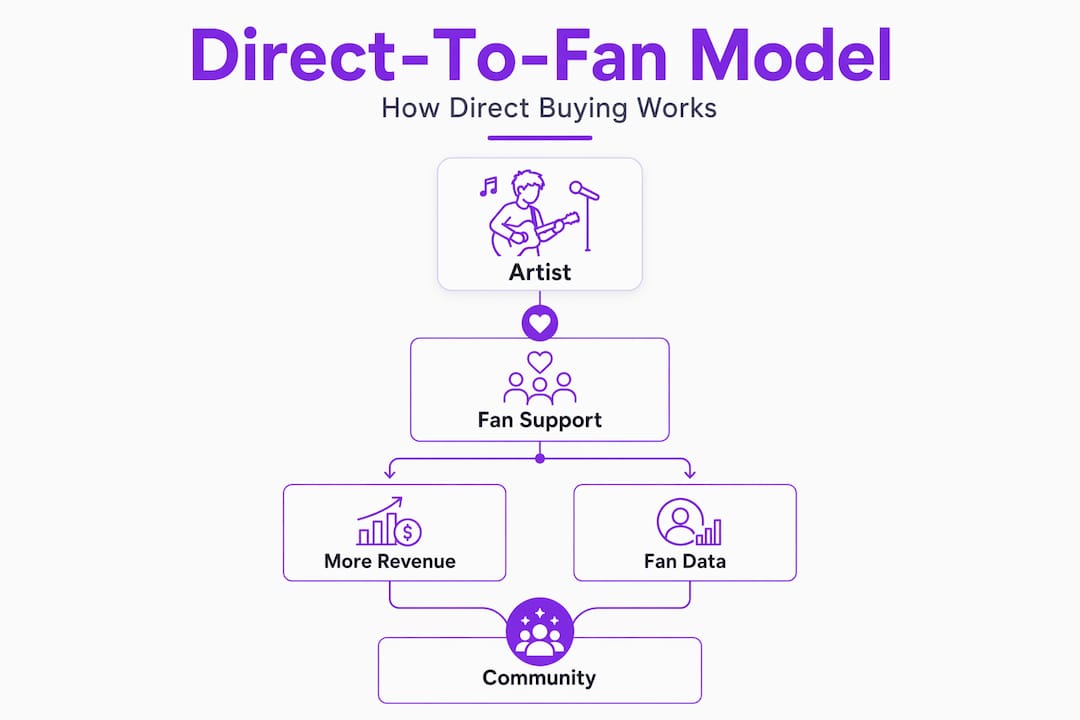
Knowing the benefits, you only need a few essentials before you can start. The requirements are different depending on which side of the transaction you're on, but neither list is long.
For fans:
- A device with internet access (phone, tablet, or computer)
- A payment method (credit card, debit card, or a digital wallet like PayPal)
- An account on whichever platform the artist uses for sales
- An email address to receive download links and receipts
For artists:
- High-quality audio files of your music (WAV or FLAC for best results, MP3 for accessibility)
- A direct storefront, whether that's your own website, a platform built for independent musicians, or a combination of both
- A payment processor to collect money securely
- An email list to notify fans when new music is available
One of the most underutilized tools for independent artists is a CRM, which stands for Customer Relationship Management. Think of it as a smart address book that tracks not just who your fans are, but how they found you, what they've bought, and when they last engaged. Artists who centralize fan contacts and use lifecycle emails and SMS messages consistently convert more casual listeners into paying supporters. Setting up automated messages, like a welcome email when someone joins your list or a reminder when a new release drops, keeps fans engaged without requiring you to manually reach out to each person.
| Tool type | Examples | Purpose |
|---|---|---|
| Storefront platform | Artist Direct, own website | Sell music and collect payments |
| Payment processor | Stripe, PayPal | Secure transaction handling |
| Email marketing | Mailchimp, ConvertKit | Fan communication and announcements |
| CRM system | HubSpot, custom tools | Fan data and relationship tracking |
| File delivery | Dropbox, platform built-in | Deliver downloads after purchase |

Pro Tip: Even if you only have 50 fans on your email list right now, start treating that list like gold. A small, engaged list of direct supporters will outperform tens of thousands of passive streaming listeners when it comes to actual income. Use setting up direct-to-fan sales as your starting point and build from there.
Step-by-step: How to purchase music directly from an artist
With resources ready, here's exactly how to buy or sell music directly step by step.
For fans, buying music directly:
- Choose your artist or album. Start by visiting the artist's website or social media profile to find where they sell their music directly. Many artists link to their storefront in their bio.
- Go to their store or platform page. Click through to their official storefront. Look for a "Shop," "Music," or "Buy" section.
- Add music to your cart. Select the tracks or album you want. Many artists offer tiered pricing, letting you pay more if you want to show extra support.
- Choose your payment method. Enter your payment details through the secure checkout. Look for familiar processors like Stripe or PayPal as a trust signal.
- Download or access your music. After payment, you'll receive a download link via email or directly on the platform. Save that link and back up your files.
For artists, setting up and running direct sales:
- Set up your storefront. Choose between a dedicated platform for independent musicians or your own website with an integrated store. Both have merit depending on where you are in your career.
- Upload your music files. Include high-quality versions and set your prices. Consider offering a "pay what you want" option to lower the barrier for new fans.
- Build and grow your email list. Offer a free track or exclusive content in exchange for an email address. This list becomes your most valuable asset over time.
- Set up payment collection. Connect a reliable payment processor and test the checkout flow yourself before announcing it publicly.
- Notify fans when new music drops. Send an email and SMS to your list the moment a release goes live. Timing matters; fans who hear about a release within the first 24 hours are far more likely to buy.
Comparing your storefront options:
| Feature | Bandcamp | Owned website/storefront |
|---|---|---|
| Setup difficulty | Low | Medium to high |
| Revenue share | 85-90% to artist | Up to 100% to artist |
| Built-in discovery | Yes | No |
| Fan data ownership | Limited | Full |
| Customization | Limited | Complete |
| Transaction fees | Platform fee applies | Payment processor fee only |
As artists combine Bandcamp and a direct storefront, the smart strategy is to use Bandcamp for discovery while building your own audience list that you can eventually migrate to a fully owned store. You get the best of both worlds: new fans find you through Bandcamp's community, while your loyal supporters buy directly through your own direct music store setup where you keep more of every dollar.
Pro Tip: If you're just starting out, launch on Bandcamp first. It's low risk, has a built-in audience of music buyers, and requires almost no technical knowledge. Once your email list hits a few hundred engaged fans, start building your own storefront in parallel.
Common challenges and how to overcome them
Even with a good process, issues come up. Here's how to make direct purchases smooth for everyone.
The most common problems fans face:
- Trust concerns about payment security. Stick to storefronts that use recognizable payment processors. If you don't see a familiar name at checkout, it's okay to ask the artist which processor they use before entering card details.
- Clunky or confusing checkout experiences. If an artist's store is hard to navigate, reach out and let them know. Most independent artists genuinely want the feedback and will fix it fast.
- Lost download links. This happens more than you'd think. Always save your purchase confirmation email and download your files immediately after buying. Store them in a cloud backup like Google Drive or iCloud.
- Missing release announcements. Add the artist's email address to your contacts so their messages don't land in spam. Better yet, whitelist their entire domain so nothing gets filtered.
The most common problems artists face:
- Fans who buy once and then go quiet. This is where behavioral automation via email and SMS becomes essential. Set up a sequence that re-engages buyers after 30, 60, or 90 days with new content, exclusive offers, or a simple personal message.
- Payment processing issues. Always test your checkout before a major release. Run a $1 test transaction yourself and confirm the download delivery works end to end.
- Fans not knowing where to buy. Put your store link in every bio, every post, and every email signature. Don't assume fans will search for it.
The best direct sales systems are nearly invisible to the fan. They click, they pay, they download, and they feel great about it. Every friction point you remove as an artist increases the chance of a completed purchase.
Pro Tip: Generate backup download links for every purchase and store them somewhere accessible. If your platform goes down or a link expires, you want to be able to resend access within minutes. Use direct sales tips to find platform options that handle this automatically.
For both artists and fans: keep copies of receipts, transaction IDs, and download files. Digital purchases can feel intangible, but treating them like physical receipts protects everyone if something goes wrong.
Why direct-to-fan music sales are the future and what most guides miss
Most mainstream music industry advice still treats streaming as the primary revenue model and everything else as supplementary. That framing is backwards, and it's costing independent artists real money and real creative freedom every single year.
Here's the uncomfortable truth: streaming platforms are not neutral infrastructure. They are businesses with their own interests, and those interests don't always align with yours as an artist. Algorithms change. Payout rates shift. Playlists that drove thousands of streams last year might deliver a fraction of that traffic today. Artists who built their entire strategy around platform discovery are discovering just how fragile that foundation is.
The artists who are quietly building durable careers right now share one common trait: they own their audience relationship. They have email lists. They have fan data. They know which supporters have bought multiple releases and which ones just discovered them last month. They use artist-owned CRM strategies to communicate directly, without an algorithm deciding who sees the message.
What most guides also miss is that this isn't just a revenue conversation. It's a power conversation. When a fan buys directly from you, they're making an active choice to support your creative independence. That transaction carries meaning that a passive stream never can. Fans who buy directly tend to show up to shows, share music with friends, and stay loyal through creative pivots in ways that algorithmic listeners simply don't.
Even small artists, those with a few hundred genuine fans rather than hundreds of thousands of followers, can build sustainable income through direct sales if they treat those relationships with intention. A hundred fans who each spend $50 a year on your music, merch, and exclusive content generate $5,000 in revenue. That's real money that supports real creative work, and it comes without surrendering your data or your margins to a platform.
The shift from platform dependency to audience ownership isn't a trend. It's the structural reality of how independent music careers will survive and thrive going forward.
Ready to sell or support music direct? Next steps
Inspired to buy or sell music directly? Here's an easy way to get started now.
Whether you're an artist ready to take control of your revenue or a fan who wants your support to actually reach the people making the music you love, the path forward is clearer than it's ever been. Direct transactions create better outcomes for everyone involved: more money for artists, more meaningful experiences for fans, and a healthier independent music ecosystem overall.
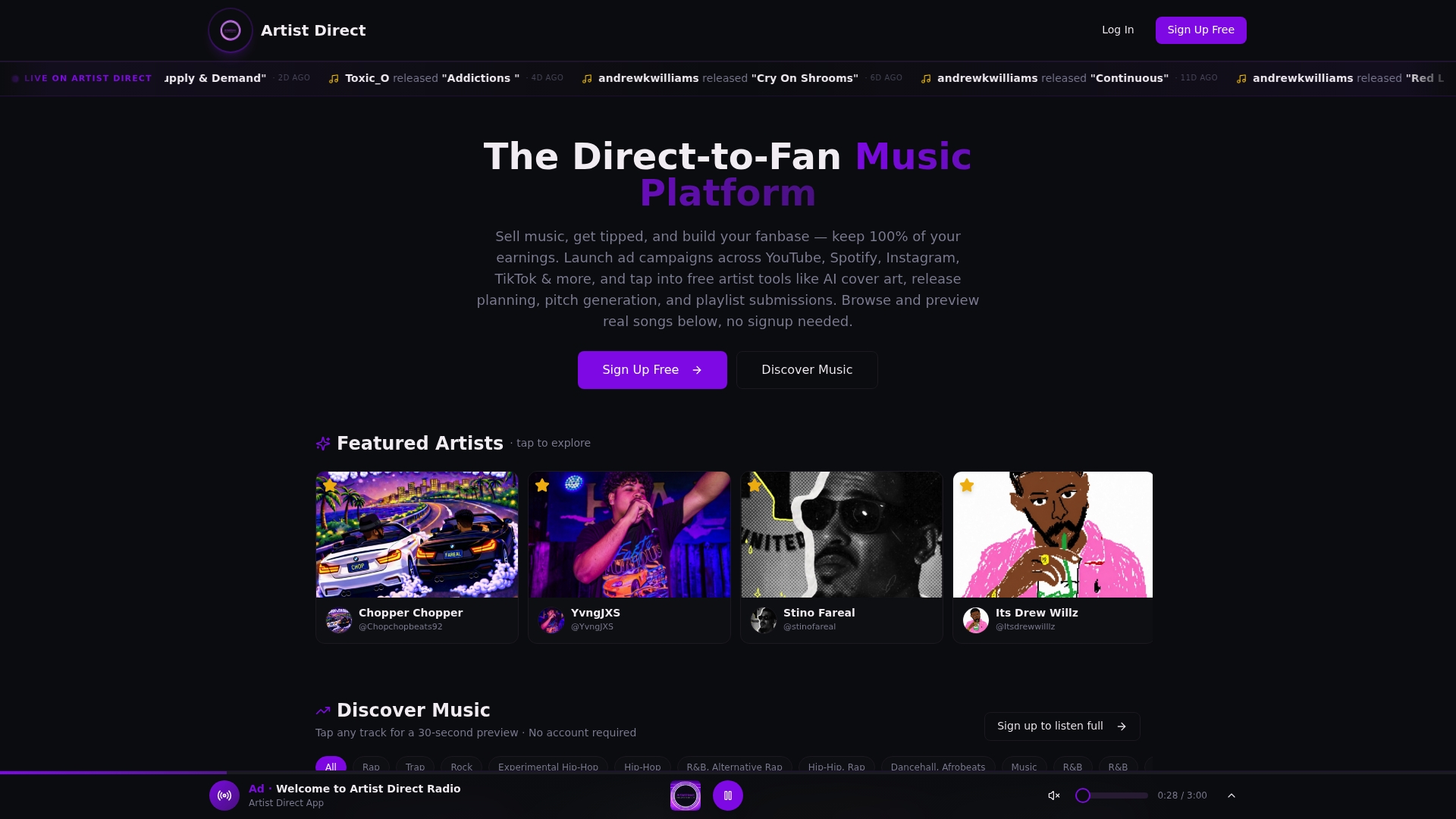
The Artist Direct platform is built specifically for this moment. Artists can upload and sell their music, set their own prices, offer free downloads to grow their audience, and accept tips from supporters, all while keeping 100% of their earnings. The platform also includes promotion tools like playlist submissions and release planning, plus a community radio station that gives uploaded tracks real passive exposure. Fans get a place to discover new music, buy directly, and connect with artists they genuinely care about. If you're ready to make direct music support your default, this is the place to start.
Frequently asked questions
What are the safest ways to pay when buying music directly?
Use trusted payment processors like Stripe, PayPal, or Bandcamp integrated checkout for security and buyer protection. These processors offer fraud protection and dispute resolution if something goes wrong.
How does buying directly from an artist help their career?
Direct purchases give artists significantly more revenue per sale and valuable fan contact information, which empowers future sales and deeper connections. As selling direct improves both income and data access, artists gain independence that streaming alone can never provide.
What if I lose a download link after buying music?
Contact the artist's support email or the platform's help center for a replacement link; most direct stores can regenerate download access quickly. Always save your purchase confirmation email as a backup reference.
Is it better for new artists to use Bandcamp or their own store?
Start with Bandcamp for easy setup and built-in discovery, then build your own store and email list as your audience grows. Owning a storefront improves both your margins and your access to fan data over time.
Can fans support artists without buying a full album?
Yes, many direct platforms allow fans to pay what they want, tip artists directly, or purchase individual tracks, making it easy to show support at any budget level.